Plants vs. Zombies™ 2
- 3.7
- Rating
- 10.00M
- Installs
- Free
- Price
 Analysis by App-foxy
I expected Plants vs. Zombies™ 2 to be the kind of casual game I would enjoy for a few days and then forget. Instead, its strongest quality appeared almost immediately: it makes a short session feel complete. I can open it, solve a small tactical problem, and leave without needing a long uninterrupted block of time. That is a useful fit for a phone game, especially when I want something more engaging than a passive distraction but less demanding than a full strategy title.
This is a free casual game from ELECTRONIC ARTS, rated Everyone, and it has been around since Oct 10, 2013. Its scale is easy to understand from the store presence: it has more than 10 million installs, an average rating of 3.8 from roughly 672 thousand ratings, and about 201 thousand written reviews. Those figures suggest a large, established audience, but they also hint at a divided experience. I found plenty to like in the core play, while the surrounding progression and purchase prompts can affect how enjoyable it remains over time.
Why the first week feels so satisfying
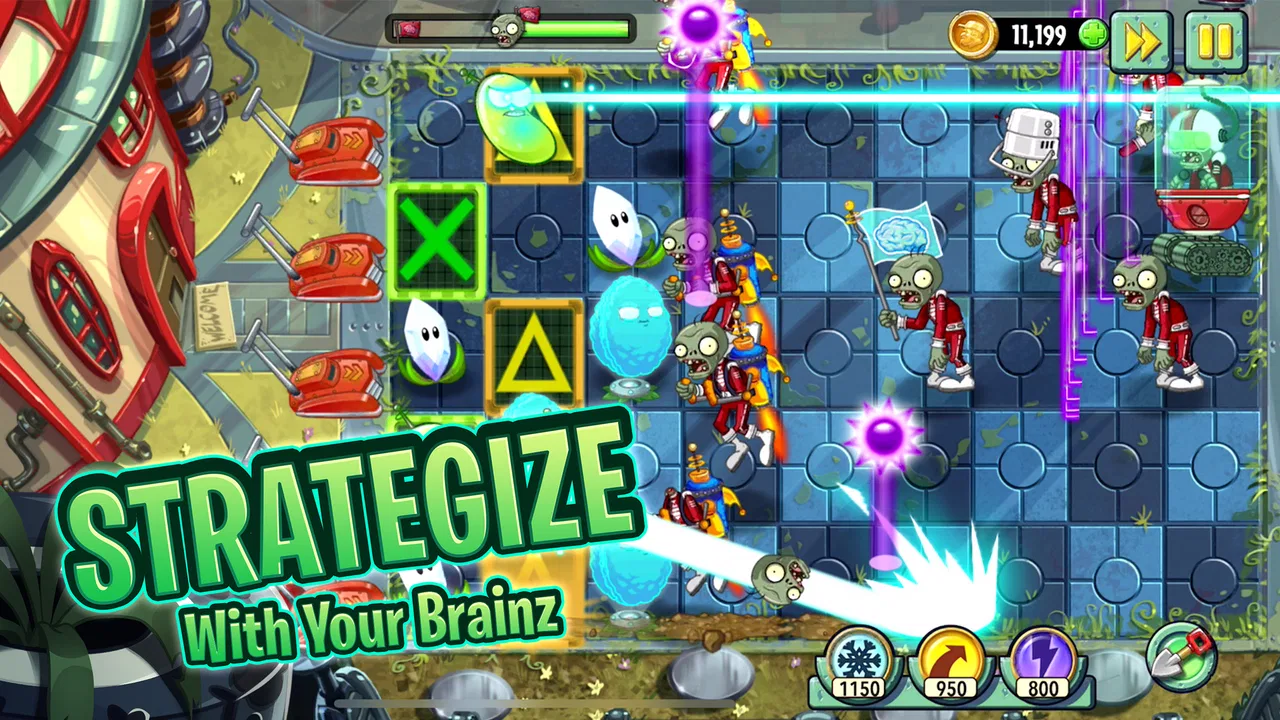
The basic idea is wonderfully readable. Plants defend a lawn, zombies advance through lanes, and I choose how to spend limited sunlight while reacting to threats. The appeal is not simply placing a strong unit and watching it work. I have to think about timing, lane pressure, plant recovery, and whether a resource is better used now or saved for a more dangerous wave.
You May Also Like

 Blood Strike: 2.5 Anniversary
Blood Strike’s Loadouts Turn Every Drop Into a Tactical Gamble
A close look at Blood Strike’s custom loadouts: how fast access to signature weapons reshapes its battle royale rhythm, rewards preparation, and narrows the gap between fights.

 Pandora - Music & Podcasts
Pandora’s Music Is Easy to Start, but Harder to Recover
Pandora’s strength is its low-effort path from a seed to a station. Its weak spot is how much confidence it asks you to place in connection, setup, and quiet recovery.

 8 Ball Pool
 Is Built on Rivalries, Rematches, and Routine
A close look at the rivalries, rematches, shared routines, and unanswered safety questions that turn a quick pool match into a persistent mobile community.

 Samsung Music
’s Quiet Strength Is Playing What You Already Own
Its reach comes less from spectacle than from dependable access to a personal library. That simplicity is both the app’s strongest retention engine and its ceiling.

 AccuWeather: Weather Radar
AccuWeather Review: A Quick, Clear Forecast for Everyday Decisions
For everyday plans, the best forecast is the one you can understand quickly. AccuWeather makes rain timing, radar, and local conditions easy to act on, with a few trade-offs.

 Hill Climb Racing
Why Hill Climb Racing Still Turns Crashes Into One More Run
A tiny car, a bumpy hill and one more upgrade: Hill Climb Racing keeps resurfacing because its simple chaos makes every near-miss feel personal.
More From Our News Desk



That clarity makes the opening sessions friendly to newcomers. The game communicates its rules through play rather than asking me to study a complicated manual. A child can understand the visual objective, while an experienced player can quickly start looking for better arrangements and more efficient responses. The Everyone rating fits the approachable presentation, although the cartoon battles still create enough pressure to keep the action from feeling completely passive.
During my first week, the most enjoyable moments came from discovering that a level could be solved in more than one sensible way. A defensive setup may be safer, but a more aggressive arrangement can finish a threat before it grows. That small choice gives each attempt a personal feel. I am not only following instructions; I am testing whether my reading of the board is correct.
The game also understands the value of visual feedback. Plants have distinct personalities, zombies are easy to identify, and the battlefield communicates danger without becoming cluttered immediately. When a lane starts collapsing, I can usually see why. That matters in a casual game because frustration feels fairer when the cause is visible and the solution is understandable.
The best early habit: observe before spending
My most useful early adjustment was to stop treating every level as a race to fill the lawn. I began watching the first wave, checking which lanes were likely to become problematic, and delaying an expensive response until the board gave me enough information. That habit improved my results more than simply trying to place plants faster.
Another practical tip is to avoid building the same pattern automatically. A formation that works against ordinary pressure can become awkward when a different zombie type changes the rhythm of a lane. I found it better to keep a flexible part of the lawn rather than committing every space too early. This is one of the reasons the game feels more thoughtful than its bright, playful appearance suggests.
Short sessions are another first-week strength. I can play while waiting for an appointment or during a brief break, and I do not feel punished for stopping after one level. At the same time, a longer sitting can become absorbing because each successful stage encourages me to try the next challenge. That balance is difficult for many mobile games to achieve.
Where the novelty begins to change
The early discovery period is generous. New plants, enemy behaviors, and level conditions keep asking me to adjust. The first impression is therefore stronger than the simple premise might suggest. I am learning a system, not merely repeating one action.
Eventually, however, the surprise becomes less important than the quality of the routine. Once I understand the broad rhythm, the question changes from “What is this level teaching me?” to “Do I want to perform this kind of challenge again?” That is the point at which the long-term value has to come from planning, experimentation, and personal goals rather than constant novelty.
What keeps it useful from month to month
For me, the game’s lasting value comes from the way it turns small tactical decisions into a repeatable habit. I can return after several days and still know what I am doing within a minute. That accessibility is a genuine advantage over more elaborate strategy games, which may demand a longer refresher before they become enjoyable again.
The best recurring sessions are not necessarily the ones where I simply push forward. I get more value when I revisit a difficult stage with a different approach, try to reduce wasted resources, or use the available plants more deliberately. This creates a self-imposed layer of challenge. The game does not need to become a competitive hobby for that to work; it can remain a quiet exercise in planning.
That said, players who need constant new mechanics may feel the formula settle too quickly. The core lane-defense structure remains the reason to play, and it is also the boundary of the experience. If I am already tired of placing units, waiting for resources, and responding to waves, the colorful setting alone will not permanently renew my interest.
A good fit for everyday interruptions
A realistic use case is a commute with unpredictable stops. I can begin a session, make a few decisions, and put the phone away when I arrive without losing the entire evening’s progress. The same applies to a parent who has only short windows of free time, or someone who wants a light game before bed rather than an intense multiplayer match.
It is also useful when I want a game that does not require communication with other people. There is no need to coordinate schedules, maintain a team, or worry about letting another player down. I can play on my own terms. For many casual players, that independence is more valuable than a larger feature list.
On the other hand, I would not choose it for a social gaming session, a deep role-playing experience, or a game built around long-form exploration. Its satisfaction comes from compact tactical puzzles. Players looking for broad character stories, free movement, or a rich competitive ladder should look elsewhere.
How it compares with familiar casual alternatives
Compared with a match-three game, this has more planning between actions and less reliance on making quick combinations. Compared with a traditional tower-defense game, it is more welcoming visually and easier to pick up, though players seeking dense customization may find it lighter. Compared with an endless runner, it asks for more deliberate decisions and offers less of the pure reflex rush.
I see its particular advantage in the middle ground. It is strategic enough to reward attention but simple enough to play while mentally tired. That makes it a better choice than many alternatives when I want meaningful decisions without a serious commitment. The trade-off is that its repeated structure becomes more visible over time than it does in games with constantly changing objectives.
The maintenance burden of returning regularly
The game itself is not difficult to maintain as a casual habit, but the player’s expectations matter. If I treat every session as a small puzzle, it remains pleasant. If I feel obligated to clear every available task or maximize every reward, the experience becomes more like a checklist. That shift is not caused by the lawn-defense mechanics alone; it comes from the way I choose to engage with the broader progression.
The current version is 13.2.1, and the long publishing history shows that this is an established mobile title rather than a brief experiment. That longevity can be reassuring for someone who wants a familiar game to revisit. It can also mean that the overall experience carries years of accumulated design decisions, so it may not feel as streamlined as a newly built casual game.
I would especially recommend setting a personal stopping point. Playing one or two stages is often enough to preserve the sense of fun. Continuing after I have stopped making thoughtful decisions usually produces diminishing returns. The game works best when I leave while I am still curious about the next attempt, not when I force myself through a routine.
Where spending pressure changes the mood
The download is free, but in-app purchases range from $0.99 to $99.99 per item. That wide range is important when deciding whether the game belongs on a long-term device. I can enjoy the basic experience without treating it like a paid game, yet the presence of purchasable items can make progression feel less purely earned than it does in a self-contained premium title.
My advice is to decide early whether I am playing for the tactical challenge or for the fastest possible access to everything. Those are different goals. If I am happy experimenting with the available progression, the free entry is appealing. If I dislike any temptation to spend or prefer a fixed-cost experience with no purchase decisions, a premium casual game may be a better match.
For families, the Everyone rating makes the presentation approachable, but I would still establish a clear rule around purchases before handing the phone to a child. The important issue is not the cartoon tone; it is making sure the free download does not become an unexpected spending route.
What causes fatigue after the first excitement
The largest source of fatigue is repetition without a personal objective. The lane structure is elegant, but elegance can become predictability when I stop experimenting. Some sessions begin to feel like maintenance rather than discovery, particularly when I use a familiar setup and pay attention only enough to finish.
Another source is uneven emotional investment. A difficult stage can be satisfying when I understand the mistake that caused failure. It is less satisfying when the result feels tied to a narrow solution I have not yet anticipated. In those moments, I prefer to pause and return later rather than immediately repeat the same attempt. A short break often restores the puzzle feeling.
The bright presentation may also divide players. I enjoy the humor and exaggerated character design, but someone seeking a serious strategy atmosphere may find it too playful. The visual style is not a minor decoration; it shapes the entire mood. This is a game for people who like their tactical decisions wrapped in cartoon energy.
Small techniques that extend its life
I found three habits especially useful for keeping the game fresh. First, I rotate my approach instead of relying on the safest familiar pattern. Second, I treat failed attempts as information about timing and lane priorities rather than immediately blaming the level. Third, I stop using a powerful response simply because it is available, and ask whether a cheaper or less obvious choice would create a more interesting solution.
A further trade-off is worth noting: experimentation can make a stage more enjoyable, but it may also make progress slower. If I am playing during a very short break, reliability is sensible. If I am settling in for a longer session, taking the less comfortable route gives the game more lasting value. The right choice depends on whether I want completion or discovery at that moment.
I also recommend returning after a gap instead of grinding when the game starts to feel flat. Its compact rules are easy to remember, and distance can make familiar stages feel readable again. That is a better long-term pattern than trying to turn every day into a mandatory session.
Who should skip it
I would skip this game if I strongly dislike free-to-play structures, even when the core play is enjoyable. The purchase range may be irrelevant to a disciplined player, but it is still part of the environment. I would also skip it if I need every session to introduce a radically different system, because the central defense loop remains the main attraction.
It is not my first recommendation for someone who wants a slow, thoughtful strategy game with extensive maps and long-term planning. Nor is it ideal for a player who wants a completely relaxing experience with no pressure, since waves can still demand quick decisions. Its sweet spot is a person who likes light strategy, clear goals, and compact attempts.
My long-term verdict
After the novelty fades, Plants vs. Zombies™ 2 earns space on my phone when I use it as a flexible tactical pastime rather than an obligation. Its strongest lasting qualities are the readable rules, the satisfying lane decisions, and the ability to fit naturally into short everyday gaps. I can return after time away and understand the appeal almost immediately.
Its weaknesses are equally clear. Repetition can expose the limits of the formula, purchase prompts may reduce the feeling of a clean progression path, and players who want deep variety will eventually outgrow the structure. The 3.8 average rating reflects a game with a broad audience but not universal satisfaction, which matches my own balanced view: the foundation is strong, while the long-term experience depends heavily on how much routine I am willing to accept.
As a free casual game, it is worth trying for anyone who enjoys tower defense but wants a friendlier, faster entry point. I would keep it installed for short sessions, occasional experimentation, and those moments when I want to solve a small problem without committing to a larger adventure. I would not make it my only mobile game, and I would not spend simply to remove the feeling of waiting unless I already knew that the game had become a lasting part of my routine.
In the end, the lasting value is not in endlessly chasing novelty. It comes from choosing how seriously to take each lawn, recognizing when a familiar strategy has become automatic, and leaving before the habit turns stale. This is at its best when it remains a game, not a daily chore.
FAQs for Plants vs. Zombies™ 2
01What is the main objective of Plants vs. Zombies™ 2?
In Plants vs. Zombies™ 2, the primary objective is to protect your house from waves of invading zombies by strategically planting various types of plants. Each plant has unique abilities that can damage or block zombies, and players must wisely manage resources to survive increasingly challenging levels.
02Can I play Plants vs. Zombies™ 2 offline?
Yes, Plants vs. Zombies™ 2 can be played offline, but some features, such as in-game purchases and certain updates or events, require an internet connection. Playing offline allows you to enjoy the main gameplay, but for a full experience, including community features, being online is recommended.
03Are there in-app purchases in Plants vs. Zombies™ 2?
Plants vs. Zombies™ 2 is free to download and play, but it does include in-app purchases. Players can buy coins, power-ups, and premium plants to enhance their gameplay experience. While purchases can provide advantages, the game can still be enjoyed and completed without spending money.
04What are the system requirements for Plants vs. Zombies™ 2?
For Android devices, Plants vs. Zombies™ 2 requires Android 4.4 and up. For iOS devices, it requires iOS 9.0 or later. The game is compatible with both smartphones and tablets, but having a device with robust processing power will ensure a smoother gaming experience.
05How does the progression system work in Plants vs. Zombies™ 2?
Plants vs. Zombies™ 2 features a level-based progression system that takes players through different themed worlds, each with unique challenges and zombie types. Completing levels rewards players with new plants and power-ups, and unlocking new worlds requires collecting stars or keys, which are earned by completing specific objectives.
Pros
- Engaging tower defense gameplay.
- Vibrant and colorful graphics.
- Frequent content updates.
- Variety of plants and zombies.
- Challenging levels for strategy lovers.
Cons
- In-app purchases can be pricey.
- Requires constant internet connection.
- Energy system limits playtime.
- Can be repetitive over time.
- Ads can interrupt gameplay.

Plants vs. Zombies™ 2
Gallery